
Loading...
Serving Decatur, IL and surrounding areas. (217) 917-9824
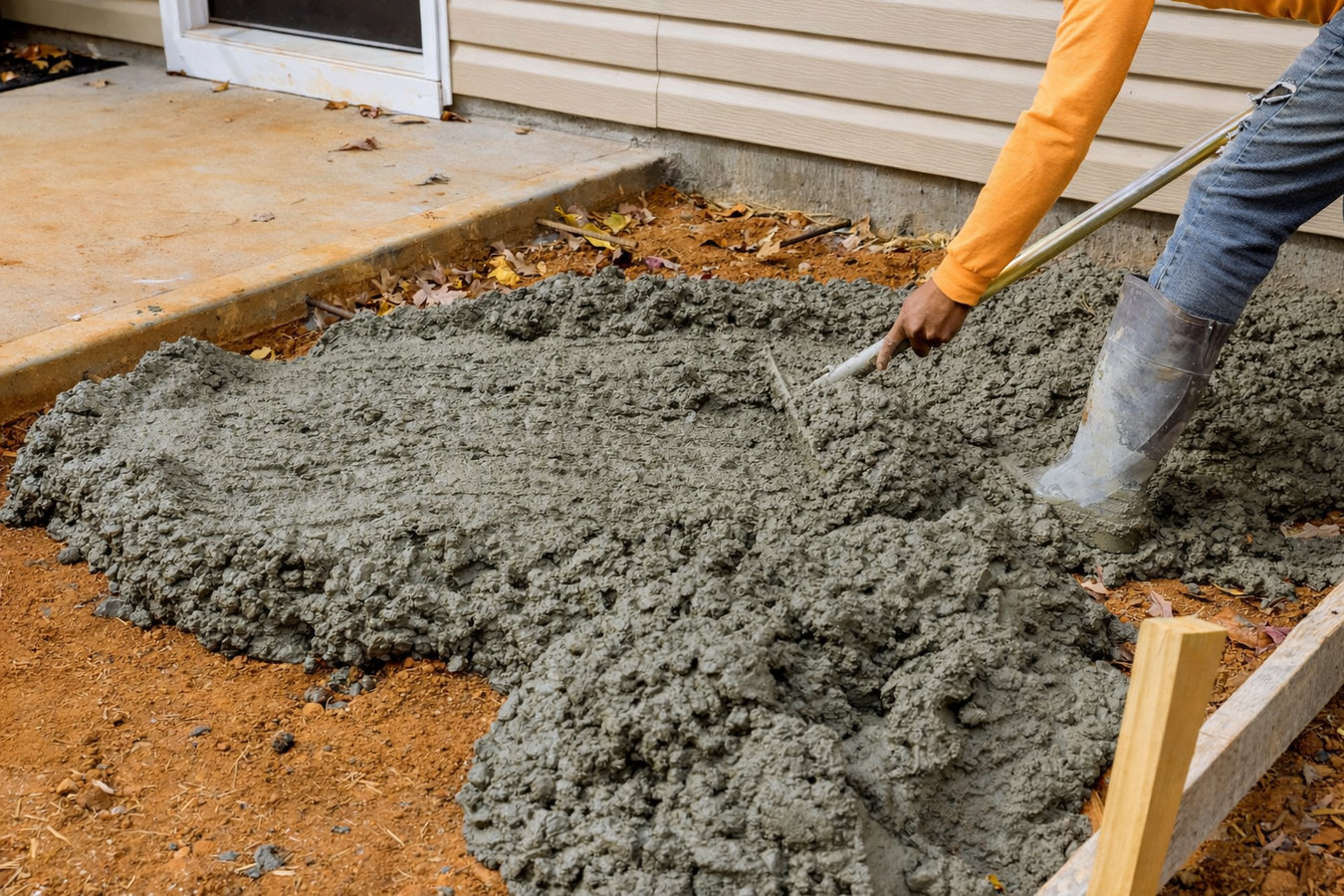
Sunken driveway, settled garage floor, or a stoop that has dropped? Foundation raising in Decatur lifts your concrete back to level - without tearing it out - using methods built for central Illinois clay soil and freeze-thaw winters.
Foundation raising in Decatur lifts a sunken concrete slab back to its original height by pumping material underneath it to fill the void - most residential jobs, from a garage floor to a driveway section, are completed in a single day, and foam-lifted surfaces can typically be driven on the same day.
For Decatur homeowners, the appeal is straightforward. Replacing a slab costs several times more than raising one, and if the concrete itself is still in decent shape, you are paying for a new slab you do not need. Central Illinois clay soil is one of the leading reasons slabs sink here - the ground swells with spring moisture and shrinks through dry summers, and that constant movement eventually creates voids that the concrete drops into.
Foundation raising is a repair service, not a replacement for concrete that is failing structurally. If your slab is crumbling or heavily fractured, a full pour may be the right answer - and our slab foundation building service covers new slab work from the ground up.
If a door that used to work fine now drags on the floor, will not latch, or swings open by itself, the frame around it may have shifted because the slab beneath it moved. In Decatur older homes, this is one of the earliest signs that a concrete surface has started to settle unevenly. It is easy to dismiss as a minor annoyance, but it is worth having a contractor look.
Walk around your garage floor, front stoop, or back patio and look at the edges where the concrete meets the house foundation or another slab. A gap of even half an inch means the slab has dropped. Decatur clay soil shifts enough through the seasons that these gaps can open gradually over several years before homeowners notice them.
If rainwater collects on your driveway, patio, or garage floor instead of running off, the surface has likely tilted inward or developed a low spot from settling. This is especially common in Decatur neighborhoods near lower-lying areas where soil stays saturated longer after storms. Standing water speeds up further settling, so this is a sign worth acting on quickly.
Hairline cracks in concrete are normal over time, but if you run your foot across a crack and feel one side is higher than the other, the slab has shifted unevenly. This kind of offset crack is a reliable sign that the ground underneath has moved in different directions. It is also a trip hazard that can create liability if someone falls on your property.
We lift sunken concrete for Decatur homeowners using both mudjacking and polyurethane foam injection, depending on what suits the slab and soil conditions. Mudjacking pumps a proven cement-soil mixture beneath the slab and is a cost-effective option for larger areas. Foam lifting uses a lightweight, rapidly curing foam that is especially suited for areas with high moisture or active soil movement - both common descriptions for sections of Decatur near low-lying neighborhoods and the Sangamon River watershed.
We also handle post-lift drainage planning - because raising a slab without addressing the water issue that caused it to sink in the first place is a short-term fix. For properties where settled concrete is part of a broader structural concern, our concrete cutting service can open damaged sections cleanly before replacement work begins.
Best for homeowners looking for a cost-effective lift on larger surface areas like driveways and patio slabs.
Suited for areas with active soil movement or high moisture - cures in under an hour and weighs far less than traditional slurry.
For homeowners dealing with trip hazards, water pooling, or gaps between slab sections caused by years of frost and soil movement.
Decatur sits on heavy clay soils across Macon County - soils that swell when wet and shrink when dry. That constant movement is one of the leading causes of slab settlement here, and it never fully stops. A large share of Decatur homes were built between the 1940s and 1970s, when soil compaction standards were less rigorous than they are today. Those slabs were poured on ground that was never fully stabilized, and the evidence shows up decades later as settled stoops, tilted garage floors, and driveways with a noticeable dip. Add in Decatur winters - with frost that can penetrate the ground by two feet or more - and you have conditions that cause concrete to shift far more actively than in warmer climates.
Neighborhoods near Lake Decatur and the lower sections of the Sangamon River basin deal with soil that stays saturated longer after heavy spring rains - exactly the condition that washes material out from beneath slabs and creates voids. Homeowners in Springfield and Bloomington face the same central Illinois clay soil challenges, and foundation raising is an equally common need across the region. The American Concrete Institute provides guidance on concrete repair standards that inform how this work should be done correctly.
We ask about the slab type, how much it has dropped, and whether you have noticed cracks or water issues. Most Decatur contractors schedule a free on-site estimate within a few days. We respond within 1 business day - no cost, no obligation.
The contractor checks how far the slab has dropped, probes the soil underneath, and evaluates whether the concrete itself is in good shape. At the end of the visit, you get a clear recommendation - raise, replace, or monitor - and a written estimate.
The crew drills small holes through the slab and pumps the lifting material underneath until the concrete rises to the correct level. They check the height as they go using a level and adjust injection points until the surface is even. Most residential jobs finish in two to four hours.
Once level, the drill holes are filled with concrete patching compound. The crew cleans up and walks you through what was done. Ask them to show you the level reading - a confident contractor will do this without hesitation. With foam, you can drive on it the same day. Mudjacking requires 24 hours.
Free on-site estimate, written quote, no pressure. We respond within 1 business day.
(217) 917-9824A lot of Decatur homeowners assume a sunken slab means a full tear-out. If your concrete is structurally sound, raising it costs a fraction of replacement and gets you the same level, safe surface. We will tell you honestly which situation you are in before any work starts - no upselling, no pressure.
Macon County sits on expansive clay that swells with moisture and shrinks in dry periods - a constant movement that causes slabs to settle faster here than in many other regions. We factor in local soil behavior and drainage patterns when we plan every job, not just the lift itself. That local knowledge is what makes results hold up year after year.
We have leveled slabs across Decatur and throughout central Illinois - driveways, garage floors, patios, stoops, and sidewalks on homes ranging from 1920s brick foursquares to 1970s ranch houses. The variety of housing stock and soil types we have worked with gives us a practical education that no training manual can replicate.
Spring booking fills fast in Decatur. We respond to every call, text, and contact form submission within one business day so you can get your slab back to level before another freeze-thaw season does more damage.
Foundation raising done right in Decatur means accounting for the local clay soil, the freeze-thaw cycle, and the drainage conditions around your specific slab - not just filling a void and calling it done. The International Concrete Repair Institute sets the professional standards for repair work like this, and we follow those guidelines to make sure our results hold up through the seasons.
When a section of your slab is too damaged to raise, precision saw cutting removes it cleanly so a fresh pour can go in its place.
Learn moreFull new slab pours for garages, additions, and outbuildings - built from the ground up when raising is no longer the right answer.
Learn moreFreeze-thaw season is hard on sunken slabs - acting now while the ground is workable gets the job done before conditions make it harder. Call or request a free estimate today.